Semi-solid products require manufacturing processes that differ substantially from tablets, capsules, and powders. Businesses developing topical pharmaceutical products should therefore choose an ointment manufacturer with capabilities relevant to the intended formulation, production scale, filling process, and packaging requirements.
For healthcare and pharmaceutical businesses in Delhi, a systematic evaluation can make provider selection considerably easier.
Begin With the Intended Product
Before approaching manufacturers, define the basic project requirements.
Useful information includes the intended formulation type, pack size, expected batch quantity, packaging format, target market, and any relevant technical requirements.
The clearer the project brief, the easier it becomes for a manufacturer to determine whether the product fits its capabilities.
Evaluate Semi-Solid Manufacturing Capability
Ointment manufacturing requires suitable mixing and processing systems.
Depending on the formulation, production may involve controlled ingredient addition, mixing, homogenization, temperature management, and filling.
Businesses should ask potential manufacturers about equipment and processes relevant to their intended product rather than relying on general pharmaceutical manufacturing experience.
Packaging Compatibility Matters
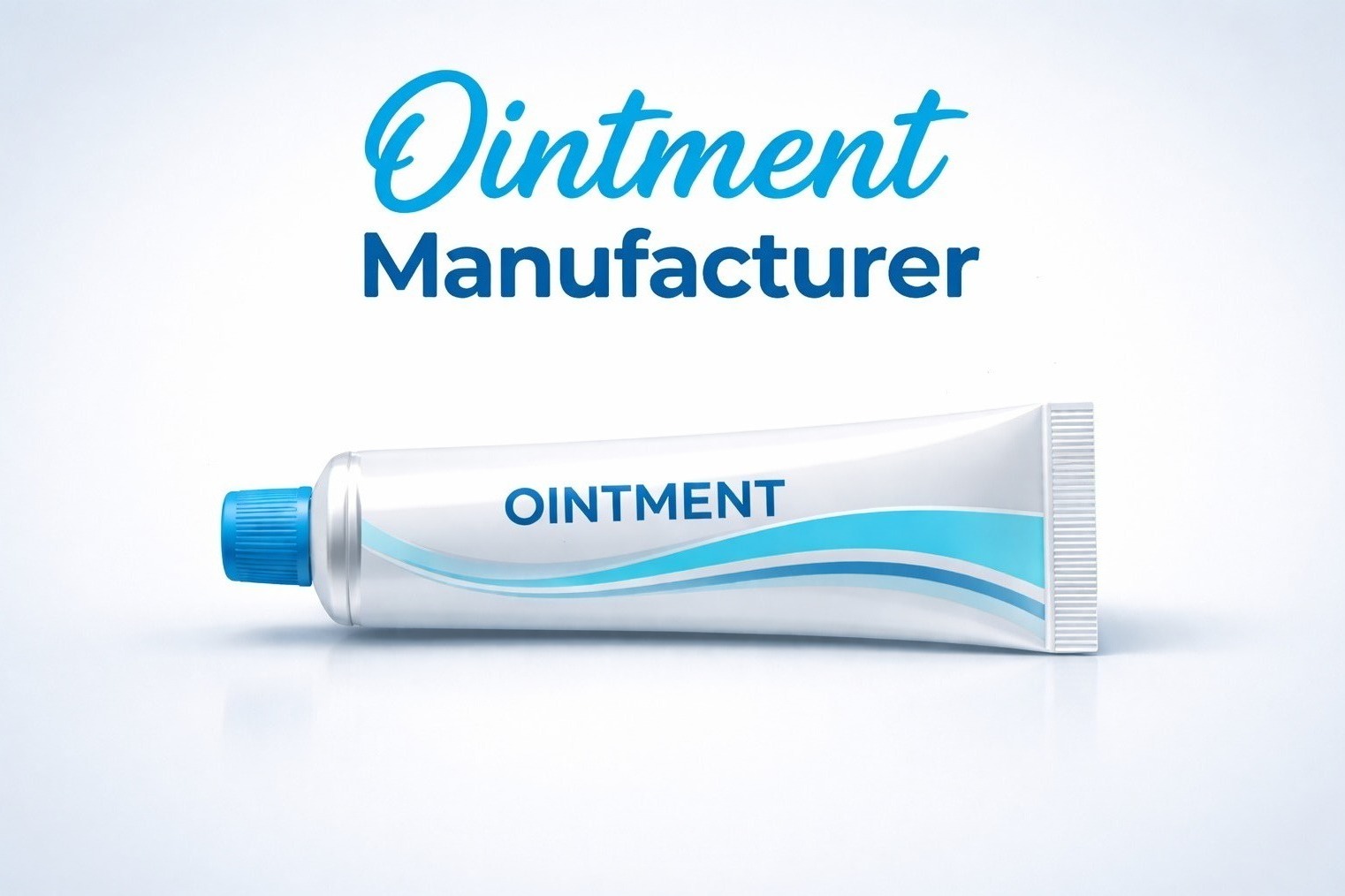
Ointments may be supplied in tubes, containers, or other suitable packaging depending on product requirements.
Packaging must be evaluated for compatibility with the formulation, intended quantity, storage requirements, and distribution conditions.
Brands should discuss packaging early because container selection can influence filling arrangements and overall production planning.
Ask About Batch Consistency
A commercially successful product needs consistent manufacturing across repeat batches.
The manufacturer should operate according to defined procedures and applicable specifications.
Companies can ask how production parameters, in-process controls, testing, documentation, and finished-product handling are managed.
Review Quality Documentation
Before approving a manufacturing relationship, determine which documents are required for your product and business model.
Requirements may differ according to product category, intended market, and regulatory framework.
Where licences, certifications, or approvals are important to your selection process, request current documentation and verify it appropriately.
Discuss Timelines Before Launch Planning
Marketing teams sometimes establish launch dates before manufacturing requirements have been finalized.
A better approach is to coordinate product development, manufacturing, packaging, and commercial planning.
Delhi-based brands serving the NCR and other regional markets should account for production lead times, packaging procurement, documentation, logistics, and inventory planning before announcing availability.
Look Beyond the First Production Batch
A manufacturer should be evaluated with repeat production in mind.
Consider whether the provider can support additional quantities, new pack sizes, portfolio expansion, and evolving commercial requirements.
Monique Pharmaceuticals Pvt Ltd works in the pharmaceutical manufacturing sector and may be evaluated by businesses seeking suitable manufacturing arrangements for their product portfolios.
A strong ointment manufacturing relationship depends on technical compatibility, transparent communication, quality systems, realistic production planning, and dependable repeat supply. Evaluating these factors before commercial production can help businesses build a more stable foundation for product growth.
Keywords