Choosing a dosage form is a product-development decision, not a catalogue exercise. By the end, you will be able to match the route and formulation to patient needs, define the technical information a manufacturer requires, compare quality evidence, and screen suppliers before signing a manufacturing arrangement.
Key takeaways
- Match the dosage form to route, dose, stability and patient use.
- Request formulation, process and analytical data before technical transfer.
- Distinguish immediate-release testing from modified-release performance testing.
- Verify batch records, packaging controls, certificates and licence documents.
How to choose the dosage form for the patient and product
Dosage form selection starts with the patient’s route, dose and ability to use the product correctly.
A child who cannot swallow needs a measured oral liquid or dispersible product; a patient needing rapid systemic exposure may need an immediate-release form; a patient needing local skin treatment needs a cream, ointment or gel rather than an oral product.
| Option | Best fit | Main decision and risk |
|---|---|---|
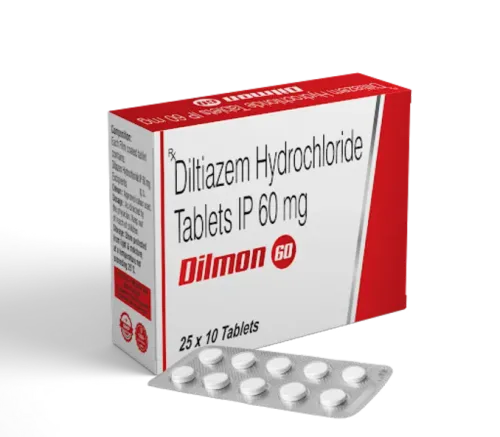
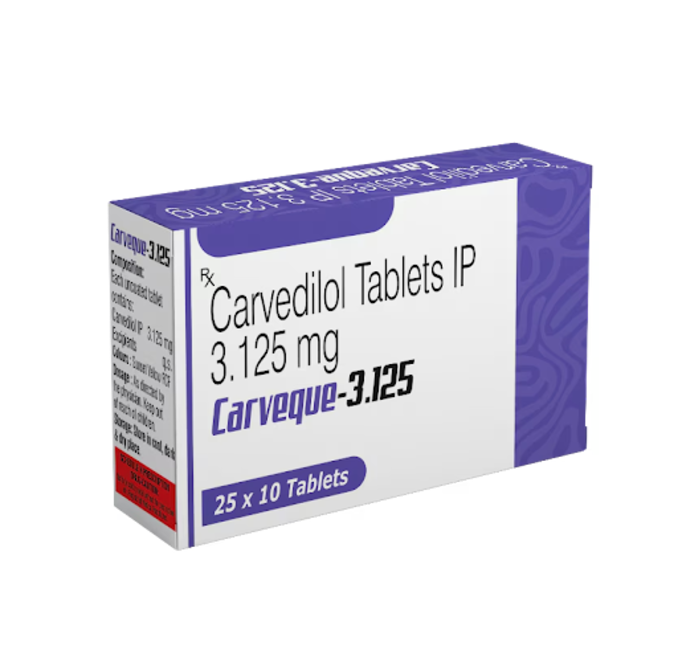
| Tablets | Measured oral doses for patients who can swallow | Efficient for many strengths, but compression, dissolution and splitting behaviour need control |
| Hard capsules | Powders or pellets in an easy-to-swallow shell | Useful for unpleasant-tasting fills; moisture and capsule-shell compatibility matter |
| Softgels5? | Oils, lipid formulations or liquid fills | Suitable for poorly water-soluble ingredients; shell stability and fill leakage require testing |
| Oral liquids | Children, older adults or flexible dosing | Taste, measuring accuracy, microbial control and container compatibility become critical |
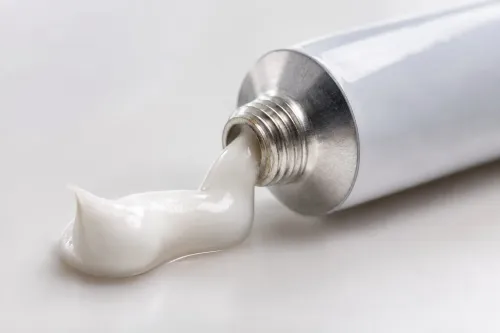
| Creams, ointments and gels | Local skin or mucosal treatment | Choose by required absorption, skin condition, sensory feel and water or oil base |
| Inhaled products or injectables | Pulmonary or parenteral administration | Require specialised devices, sterile controls and route-specific performance testing |
| Modified-release forms | Fewer daily doses or controlled exposure | Use only when the release profile has a clinical purpose; crushing can cause dose dumping |
Give the manufacturer the target strength, dose volume or fill weight, excipient limits, tablet weight or capsule size, release profile, route, pack type and required shelf life. Match the form to specific manufacturing permissions before transfer: oral solids, liquids, sterile products and external preparations do not share one generic authorization.
Packaging completes the choice. Use high-barrier packs for moisture-sensitive tablets, light protection for photosensitive products and proven container-closure compatibility for liquids.
What development work turns an active ingredient into a manufacturable product
Before commercial production, the chosen dosage form needs a controlled formula, repeatable process, suitable equipment and evidence that each unit performs as intended. A laboratory batch that meets assay can still fail through poor dissolution, segregation, microbial growth or dose variation.
1. Start with preformulation. Measure the active ingredient’s solubility, particle size, polymorphic form, moisture sensitivity, flow and compression behaviour. These results determine whether you need milling, granulation, a solubiliser or protection from humidity.
2. Complete excipient compatibility studies. Test the active against each proposed excipient under heat, humidity and light, then confirm that the excipient’s functionality, microbial quality and moisture level suit the product. “Pharmaceutical grade” alone is not enough.
3. Define the process parameters. For tablets and capsules, establish granulation endpoint, drying temperature, blending time, lubricant level, tablet weight, compression force, capsule fill weight and dissolution profile. Over-blending can damage release performance; under-blending can produce content variation.
4. Test the dosage form under realistic storage conditions. Oral liquids require controls for pH, viscosity, preservative effectiveness, sedimentation, redispersibility, fill volume and container-closure compatibility. Creams, inhaled products, injectables and modified-release forms need their own performance tests.
5. Design the commercial pack with the formula. Use high-barrier blisters or bottles and desiccant for moisture-sensitive tablets, light-protective materials for photosensitive products, and compatible closures for liquids. A pack change can require new stability and extractables or leachables studies.
6. Match the product to the manufacturer’s specific permissions, premises and equipment under India’s Drugs and Cosmetics Rules and Schedule M. Confirm comparative dissolution, bioavailability or bioequivalence evidence when the formulation or release mechanism could alter exposure.
How immediate-release and modified-release products differ
The key difference is where and how fast the active ingredient becomes available. An immediate-release product releases its dose promptly; modified-release products control release rate or location, changing exposure, dosing frequency and misuse consequences.
| Product | Design | Testing and misuse risk |
|---|---|---|
| Immediate-release | Disintegrates and dissolves quickly after administration. | Disintegration and dissolution, often at a defined time point, plus assay and content uniformity. Delayed dissolution can reduce or delay the intended dose. |
| Prolonged-release | Extends drug release over a longer period to reduce dosing frequency. | Multi-time-point dissolution confirms the release curve. Crushing or chewing can release too much drug at once. |
| Sustained-release | Delivers drug at a controlled rate to reduce concentration peaks and troughs. | Dissolution is assessed across several time points and conditions. Altering the matrix or coating can cause dose dumping, toxicity or treatment failure. |
| Enteric-coated tablets | Resist gastric fluid and release in intestinal conditions, protecting the drug or stomach. | Testing uses an acid stage followed by buffered intestinal media. Chewing or crushing destroys the barrier and can cause gastric irritation or drug degradation. |
Prolonged-release and sustained-release are often used interchangeably, so confirm the actual release mechanism and specification rather than relying on the label. A single-point dissolution test suitable for an immediate-release tablet does not demonstrate controlled or delayed release.
Follow the product instructions: do not split, crush or chew a modified-release tablet unless the approved product information specifically permits it.
Which quality tests, packaging controls and documents prove the product is under control
Review evidence in four linked areas: finished-product testing, packaging performance, stability in the proposed commercial pack, and controlled manufacturing records. A passing assay alone does not prove uniform dose delivery or correct release.
For an oral solid, request:
- Weight variation, content uniformity, hardness and friability results, plus the disintegration test result.
- Dissolution data against the approved method; modified-release and enteric-coated products need multiple time points that show the intended release profile, not one immediate-release reading.
- Blend-uniformity, compression or encapsulation records, and investigation reports for any out-of-specification result.
- Raw-material specifications and certificates of analysis covering excipient functionality, particle size, moisture, polymorphic form and microbial quality.
- The executed batch manufacturing record, approved master formula, in-process limits, release certificate and deviation or corrective-action records.
| Dosage form | Evidence to review | Commercial-pack control |
|---|---|---|
| Immediate-release tablet | Assay, weight variation, hardness, friability, disintegration and dissolution | Moisture barrier confirmed through stability data |
| Modified-release tablet | Stage-by-stage dissolution profile and abuse or dose-dumping assessment | Seal integrity and barrier performance retained through shelf life |
| Oral liquid | Assay, pH, viscosity, microbial limits, preservative content and phase-separation checks | Container-closure compatibility, leak testing and dosing-device accuracy |
| Sterile injection | Sterility, bacterial endotoxins, particulate matter, assay and container-closure integrity | Validated sterilisation or aseptic process and secure vial or ampoule seal |
Stability studies must use the proposed container-closure system, including high-barrier blister, bottle, desiccant, light protection or liquid closure as applicable. For India, inspect data from hot and humid conditions for moisture ingress, viscosity drift, phase separation and preservative loss. A packaging change can require new stability and extractables or leachables assessment.
How to compare manufacturers before technical transfer
Reject a contract pharmaceutical manufacturer before transfer if its licence does not cover your exact dosage form and proposed strength. A tablet authorisation does not establish permission for sterile products, oral liquids, creams, inhaled products or biologicals.
Check each manufacturer against the same evidence:
| Check | Evidence to compare | What can go wrong |
|---|---|---|
| Permissions | Form-specific manufacturing licence, approved premises and Schedule M controls | Production starts outside the permitted scope |
| Capacity | Minimum batch size, validated equipment, tooling availability, line capacity and reserved campaign dates | Pilot quantities cannot scale, or launch batches are delayed |
| Development effort | Formulation gap assessment, scale-up plan and method-transfer protocol | Laboratory success fails on the commercial line |
| Documentation | Master formula, batch records, specifications, validation reports, stability data and change history | You cannot investigate a deviation or defend release data |
| Packaging | Container-closure compatibility, filling limits, artwork control and packaging-line capability | Moisture ingress, leakage, wrong pack or fill-volume errors |
| Contract duties | Written ownership of deviations, OOS results, complaints, recalls, change control, stability, data retention, inspections and batch release | A failed or recalled batch creates a dispute |
Match excipient functionality, particle size, polymorphic form, moisture and microbial quality to the dosage form; “pharmaceutical grade” alone is insufficient. For semisolids, compare rheology and mixing parameters, not batch size alone. For oral liquids, compare preservative-effectiveness, pH, viscosity, redispersibility and container closure.
A buyer assessing Monique Pharmaceuticals Pvt Ltd should request this evidence before approving technical transfer, not after the first commercial batch.
Related products
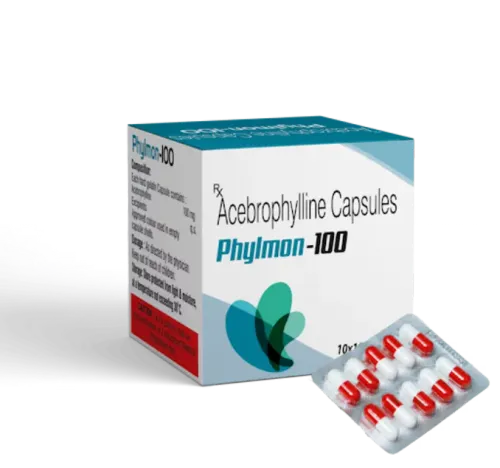
 | Pharmaceutical Medicines ₹82 Phylmon-100 Capsule is utilised for the treatment and prevention of symptoms associated with asthma, bronchitis, and chronic obstructive pulmonary... View product → |
 | Doximon-400 ₹400 Doximon-400mg Tablet is utilised for the treatment and prevention of symptoms associated with asthma and chronic obstructive pulmonary disorder (a... View product → |
Frequently asked questions
How do you choose a pharmaceutical dosage form?
Match the route, dose, stability, absorption needs and patient’s ability to use the product correctly. Compare tablets, capsules, liquids, creams, inhaled products and other suitable forms.
What development work makes an active ingredient manufacturable?
Confirm API identity and quality, select excipients, develop the formulation and process, establish in-process controls, validate analytical methods, and demonstrate stability.
How do immediate-release and modified-release products differ?
Immediate-release products are designed to release the active ingredient without a release-controlling mechanism. Modified-release products use formulation or coating technology to delay, extend or otherwise control release and require matching dissolution tests.
Which documents should you review before technical transfer?
Review the manufacturing licence, master formula, batch manufacturing and packaging records, specifications, analytical methods, validation reports, stability data, certificates of analysis and change-control history.
Related products
 | Pharmaceutical Medicines Indomethacin Sustained Release Capsules 75mg ₹150 Indomon-75 Capsule is effective in alleviating moderate pain and lowering fever. View product → |
 | Pharmaceutical Medicines Amitriptyline Hydrochloride Tablets IP 25 mg ₹40 Montylline-25 Tablet is a medicine used to treat depression by helping improve mood and reduce anxiety. View product → |
 | Pharmaceutical Medicines Metformin Hydrochloride Prolonged Release & Glimepiride Tablets IP ₹210 Glycomon G2-1000 Tablet PR belongs to a category of medicines known as anti-diabetic drugs. View product → |
 | Pharmaceutical Medicines ₹450 Monitidine-150 Tablet is used to treat conditions caused by excess stomach acid, such as gastroesophageal reflux disease (GERD) and peptic ulcer... View product → |